Τρίτη 19 Ιανουαρίου 2021

Blocking IL1 Beta Promotes Tumor Regression and Remodeling of the Myeloid Compartment in a Renal Cell Carcinoma Model: Multidimensional Analyses

Cancer shared this article with you from Inoreader

2.cover-source.jpg

Purpose:

Intratumoral immunosuppression mediated by myeloid-derived suppressor cells (MDSC) and tumor-associated macrophages (TAM) represents a potential mechanism of immune checkpoint inhibitor (ICI) resistance in solid tumors. By promoting TAM and MDSC infiltration, IL1β may drive adaptive and innate immune resistance in renal cell carcinoma (RCC) and in other tumor types.

Experimental Design:

Using the RENCA model of RCC, we evaluated clinically relevant combinations of anti-IL1β plus either anti-PD-1 or the multitargeted tyrosine kinase inhibitor (TKI), cabozantinib. We performed comprehensive immune profiling of established RENCA tumors via multiparameter flow cytometry, tumor cytokine profiling, and single-cell RNA sequencing (RNA-seq). Similar analyses were extended to the MC38 tumor model.

Results:

Analyses via multiparameter flow cytometry, tumor cytokine profiling, and single-cell RNA-seq showed that anti-IL1β reduces infiltration of polymorphonuclear MDSCs and TAMs. Combination treatment with anti-IL1β plus anti-PD-1 or cabozantinib showed increased antitumor activity that was associated with decreases in immunosuppressive MDSCs and increases in M1-like TAMs.

Conclusions:

Single-cell RNA-seq analyses show that IL1β blockade and ICI or TKI remodel the myeloid compartment through nonredundant, relatively T-cell–independent mechanisms. IL1β is an upstream mediator of adaptive myeloid resistance and represents a potential target for kidney cancer immunotherapy.

View on the web

Early 3+3 Trial Dose-Escalation Phase I Clinical Trial Design and Suitability for Immune Checkpoint Inhibitors

Cancer shared this article with you from Inoreader
Purpose:

Despite the expansion of immune checkpoint inhibitor (ICI) indications, the relationship between ICI dose and toxicity or response is not well established. To understand this correlation, we performed a meta-analysis of ICI trials that used dose escalation.

Experimental Design:

We searched PubMed and abstracts presented at (inter)national meetings for trials using FDA-approved ICIs. The reported rates of grade 3–5 adverse events (G3–5 AE), immune-related adverse events (irAE), and response were correlated with doses within each ICI using marginal exact generalized linear models.

Results:

A total of 74 trials (7,469 patients) published between January 2010 and January 2017 were included. For ipilimumab, the incidence of G3–5 AEs was 34% with a significant 27% reduced risk in lower doses (P = 0.002). However, no relationship was observed between dose and irAEs or response. For nivolumab, the incidence of G3–5 AEs was 20.1% which was lower in non–small cell lung cancer (NSCLC) compared with renal cell carcinoma (RCC) or melanoma (P ≤ 0.05) with no dose-toxicity relationship. In melanoma and NSCLC, a dose–response association was observed, which was not observed in RCC. For pembrolizumab, the incidence of G3–5 AEs was 13.3%, which was lower in melanoma compared with NSCLC (P = 0.03) with no dose-toxicity relationship. In melanoma, lower dose levels correlated with decreased odds of response (P = 0.01), a relationship that was not observed in NSCLC.

Conclusions:

Our analysis shows a lack of consistent dose-toxicity or dose–response correlation with ICIs. Therefore, dose escalation is not an appropriate design to conduct ICI studies. Here we present an innovative trial design for immune-modulating agents.


View on the web

Recurrent HNSCC Harbor an Immunosuppressive Tumor Immune Microenvironment Suggesting Successful Tumor Immune Evasion

Cancer shared this article with you from Inoreader

2.cover-source.jpg

Purpose:

Recurrent tumors (RT) of head and neck squamous cell carcinoma (HNSCC) occur in up to 60%, with poor therapeutic response and detrimental prognosis. We hypothesized that HNSCC RTs successfully evade antitumor immune response and aimed to reveal tumor immune microenvironment (TIME) changes of primary tumors (PT) and corresponding RTs.

Experimental Design:

Tumor-infiltrating leukocytes (TIL) of 300 PTs and 108 RTs from two large independent and clinically well-characterized HNSCC cohorts [discovery cohort (DC), validation cohort (VD)] were compared by IHC. mRNA expression analysis of 730 immune-related genes was performed for 18 PTs and RTs after adjuvant chemoradiotherapy (CRT). The effect of chemotherapy and radiation resistance was assessed with an in vitro spheroid/immunocyte coculture model.

Results:

TIME analysis revealed overall decrease of TILs with significant loss of CD8+ T cells (DC P = 0.045/VC P < 0.0001) and B lymphocytes (DC P = 0.036/VC P < 0.0001) in RTs compared with PTs in both cohorts. Decrease predominantly occurred in RTs after CRT. Gene expression analysis confirmed loss of TILs (P = 0.0004) and B lymphocytes (P < 0.0001) and showed relative increase of neutrophils (P = 0.018), macrophages (P < 0.0001), dendritic cells (P = 0.0002), and mast cells (P = 0.0057) as well as lower overall expression of immune-related genes (P = 0.018) in RTs after CRT. Genes involved in B-lymphocyte functions and number of tertiary lymphoid structures showed the strongest decrease. SPP1 and MAPK1 were upregulated in vivo and in vitro, indicating their potential suitability as therapeutic targets in CRT resistance.

Conclusions:

HNSCC RTs have an immunosuppressive TIME, which is particularly apparent after adjuvant CRT and might substantially contribute to poor therapeutic response and prognosis.

View on the web

CD19-specific CAR T Cells that Express a PD-1/CD28 Chimeric Switch-Receptor are Effective in Patients with PD-L1-positive B-Cell Lymphoma

Cancer shared this article with you from Inoreader

2.cover-source.jpg

Purpose:

CD19-specific chimeric antigen receptor (CAR) T-cell therapy is effective against refractory or relapsed (R/R) B-cell lymphoma, but the efficacy is hindered by the existence of PD-1/PD-L1 pathway.

Patients and Methods:

Here, we generated a novel anti-CD19 CAR-expressing PD-1/CD28 chimeric switch-receptor (CD19-PD-1/CD28-CAR). We then conducted a phase Ib study to evaluate safety and efficacy of CD19-PD-1/CD28-CAR T cells in the treatment of PD-L1+ B-cell lymphoma.

Results:

We found that CD19-PD-1/CD28-CAR T cells had superior T-cell proliferation, cytokine production, and sequentially capability of killing PD-L1+ B-cell lymphoma cells in vitro and in vivo relative to the prototype, CD19-CAR T cells. Among 17 adult patients with R/R lymphoma who received the CAR T therapy, 10 patients had objective response (58.8%), including seven patients with complete remission (41.2%). At a median follow-up 15 months, median overall survival for all patients was not reached. Remarkably, no severe neurologic toxicity or cytokine release syndrome was observed.

Conclusions:

This first-in-human study demonstrates the tolerability, safety, and encouraging efficacy of CD19-PD-1/CD28-CART in PD-L1+ large B-cell lymphoma.

View on the web

RNA sequencing and Immunohistochemistry Reveal ZFN7 as a Stronger Marker of Survival than Molecular Subtypes in G-CIMP-negative Glioblastoma

Cancer shared this article with you from Inoreader

2.cover-source.jpg

Purpose:

Glioblastoma is the most aggressive brain tumor in adults and has few therapeutic options. The study of molecular subtype classifications may lead to improved prognostic classification and identification of new therapeutic targets. The Cancer Genome Atlas (TCGA) subtype classification has mainly been applied in U.S. clinical trials, while the intrinsic glioma subtype (IGS) has mainly been applied in European trials.

Experimental Design:

From paraffin-embedded tumor samples of 432 patients with uniformly treated, newly diagnosed glioblastoma, we built tissue microarrays for IHC analysis and applied RNA sequencing to the best samples to classify them according to TCGA and IGS subtypes.

Results:

We obtained transcriptomic results from 124 patients. There was a lack of agreement among the three TCGA classificatory algorithms employed, which was not solely attributable to intratumoral heterogeneity. There was overlapping of TCGA mesenchymal subtype with IGS cluster 23 and of TCGA classical subtype with IGS cluster 18. Molecular subtypes were not associated with prognosis, but levels of expression of 13 novel genes were identified as independent prognostic markers in glioma-CpG island methylator phenotype–negative patients, independently of clinical factors and MGMT methylation. These findings were validated in at least one external database. Three of the 13 genes were selected for IHC validation. In particular, high ZNF7 RNA expression and low ZNF7 protein expression were strongly associated with longer survival, independently of molecular subtypes.

Conclusions:

TCGA and IGS molecular classifications of glioblastoma have no higher prognostic value than individual genes and should be refined before being applied to clinical trials.

View on the web

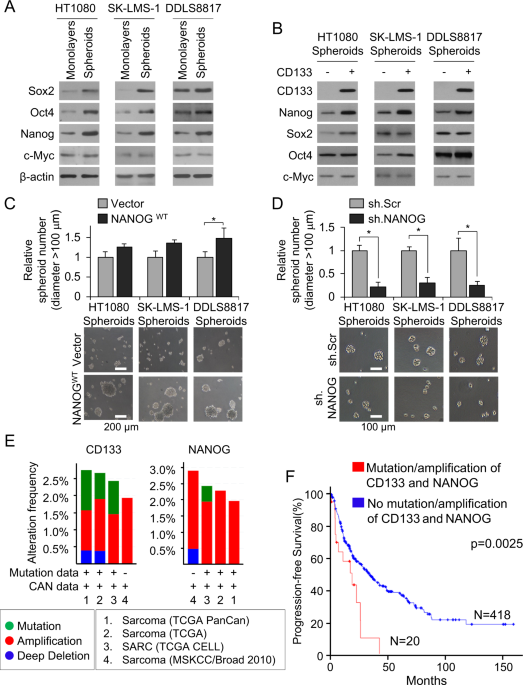
PI3K/Akt pathway and Nanog maintain cancer stem cells in sarcomas

Cancer shared this article with you from Inoreader

41389_2020_300_Fig1_HTML.png

Oncogenesis, Published online: 19 January 2021; doi:10.1038/s41389-020-00300-z

PI3K/Akt pathway and Nanog maintain cancer stem cells in sarcomas
View on the web

The role of the glutamine transporter ASCT2 in antineoplastic therapy

Cancer shared this article with you from Inoreader

280.jpg

Abstract

Cancer cells are metabolically reprogrammed to support their high rates of proliferation, continuous growth, survival, invasion, metastasis, and resistance to cancer treatments. Among changes in cancer cell bioenergetics, the role of glutamine metabolism has been receiving increasing attention. Increased glutaminolysis in cancer cells is associated with increased expression of membrane transporters that mediate the cellular uptake of glutamine. ASCT2 (Alanine, Serine, Cysteine Transporter 2) is a Na+-dependent transmembrane transporter overexpressed in cancer cells and considered to be the primary transporter for glutamine in these cells. The possibility of inhibiting ASCT2 for antineoplastic therapy is currently under investigation. In this article, we will present the pharmacological agents currently known to act on ASCT2, which have been attracting attention in antineoplastic therapy research. We will also address the impact of ASCT2 inhibition on t he prognosis of some cancers. We conclude that ASCT2 inhibition and combination of ASCT2 inhibitors with other anti-tumor therapies may be a promising antineoplastic strategy. However, more research is needed in this area.

View on the web