Πέμπτη 2 Ιουνίου 2022

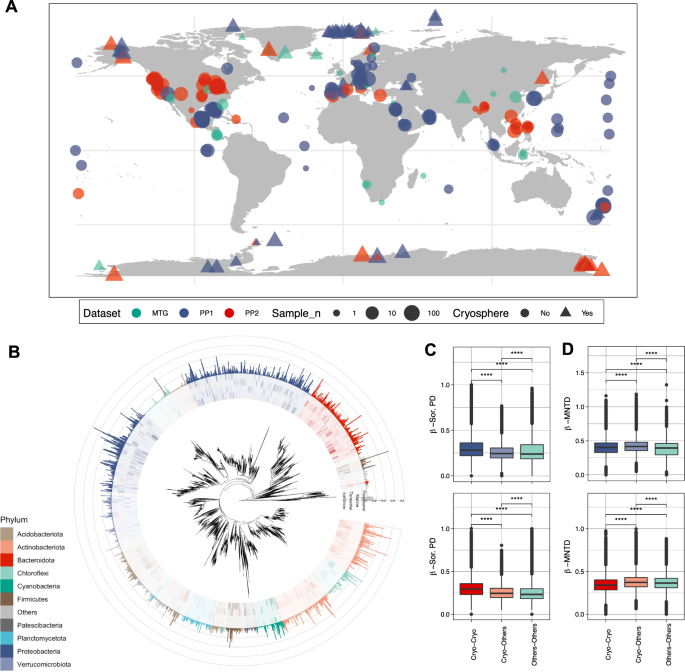
The microbiome of cryospheric ecosystems

alexandrossfakianakis shared this article with you from Inoreader

41467_2022_30816_Fig1_HTML.png

View on Web

Hippocampal avoidance prophylactic cranial irradiation (HA-PCI) for small cell lung cancer reduces hippocampal atrophy compared to conventional PCI

alexandrossfakianakis shared this article with you from Inoreader
Abstract
Background
Reducing radiation dose to the hippocampus with hippocampal avoidance prophylactic cranial irradiation (HA-PCI) is proposed to prevent cognitive decline. It has, however, not been investigated whether hippocampal atrophy is actually mitigated by this approach. Here, we determined whether HA-PCI reduces hippocampal atrophy. Additionally we evaluated neurotoxicity of (HA-)PCI to other brain regions. Finally, we evaluated associations of hippocampal atrophy and brain neurotoxicity with memory decline.
Methods
High quality research MRI scans were acquired in the multicenter, randomized phase 3 trial NCT01780675. Hippocampal atrophy was evaluated 4 months (57 HAPCI patients and 46 PCI patients) and 12 months (28 HAPCI patients and 27 PCI patients) after (HA-)PCI. We additionally studied multimodal indices of brain injury. Memory was assessed with the Hopkins Verbal Learning Test Revised (HVLT-R).
Results
HA-PCI r educed hippocampal atrophy at 4 months (1.8% for HA-PCI and 3.0% for PCI) and at 12 months (3.0% for HA-PCI and 5.8% for PCI). Both HA-PCI and PCI were associated with considerable reductions of gray matter and normal appearing white matter, increases of white matter hyperintensities and brain aging. There were no significant associations between hippocampal atrophy and memory.
Conclusions
HA-PCI reduces hippocampal atrophy at 4 and 12 months compared to regular PCI. Both types of radiotherapy are associated with considerable brain injury. We did not find evidence for excessive brain injury after HA-PCI relative to PCI. Hippocampal atrophy was not associated with memory decline in this population as measured with HVLT-R. The usefulness of HA-PCI is still subject to debate.
View on Web

Phase II study of alisertib as a single agent for treating recurrent or progressive atypical teratoid/rhabdoid tumor

alexandrossfakianakis shared this article with you from Inoreader
Abstract
Background
Recurrent atypical teratoid/rhabdoid tumor (AT/RT) is, most often, a fatal pediatric malignancy with limited curative options.
Methods
We conducted a phase II study of Aurora kinase A inhibitor alisertib in patients aged <22 years with recurrent AT/RT. Patients received alisertib once daily (80 mg/m 2 as enteric-coated tablets or 60 mg/m 2 as liquid formulation) on Days 1–7 of a 21-day cycle until progressive disease (PD) occurred. Alisertib plasma concentrations were measured in cycle 1 on Days 1 (single dose) and 7 (steady state) and analyzed with noncompartmental pharmacokinetics. Trial efficacy end point was ≥10 participants with stable disease (SD) or better at 12 weeks.
Results
SD (n=8) and partial response (PR) (n=1) were observed among 30 evaluable patients. Progression-free survival (PFS) was 30.0% ± 7.9% at 6 months and 13.3% ± 5.6% at 1 year. One-year overa ll survival (OS) was 36.7% ± 8.4%. Two patients continued treatment for >12 months. PFS did not differ by AT/RT molecular groups. Neutropenia was the most common adverse effect (n=23/30, 77%). The 22 patients who received liquid formulation had a higher mean maximum concentration (Cmax) of 10.1 ± 3.0 µM and faster time to Cmax (Tmax = 1.2 ± 0.7 h) than those who received tablets (Cmax = 5.7 ± 2.4 µM, Tmax = 3.4 ± 1.4 h).
Conclusions
Although the study did not meet pre-determined efficacy end point, single agent alisertib was well tolerated by children with recurrent AT/RT, and SD or PR was observed in approximately a third of the patients.

View on Web

Overexpression of TIGAR and HO-1 in peripheral blood mononuclear cells (PBMCs) of breast cancer patients treated with radiotherapy

alexandrossfakianakis shared this article with you from Inoreader
.
View on Web

Dedicated isotropic 3-D T1 SPACE sequence imaging for radiosurgery planning improves brain metastases detection and reduces the risk of intracranial relapse

alexandrossfakianakis shared this article with you from Inoreader

S01678140.gif

Publication date: Available online 2 June 2022

Source: Radiotherapy and Oncology

Author(s): Tugce Kutuk, Kevin J. Abrams, Martin C. Tom, Muni Rubens, Haley Appel, Charif Sidani, Matthew D. Hall, Ranjini Tolakanahalli, D. Jay J. Wieczorek, Alonso N. Gutierrez, Michael W. McDermott, Manmeet S. Ahluwalia, Minesh P. Mehta, Rupesh Kotecha

View on Web

First case of human Brucella canis infection in the Netherlands

alexandrossfakianakis shared this article with you from Inoreader
Abstract
A patient was diagnosed with B. canis following exposure to infected dogs in her breeding facility. Transboundary spread of B. canis trough (illegal) import of infected dogs to non-endemic countries in Europe suggest that B. canis infection should be considered in European patients with occupational exposure to dogs.
View on Web