Τετάρτη 18 Μαΐου 2022

Reducing gender differences in student motivational‐affective factors: A meta‐analysis of school‐based interventions

alexandrossfakianakis shared this article with you from Inoreader

Abstract

Background

Research shows that gender differences tend to exist in student motivational-affective factors in core subjects such as math, science or reading, where one gender is stereotypically disadvantaged.

Aims

This study aimed to investigate strategies that could reduce these gender differences by conducting a meta-analysis on school-based intervention studies that targeted student motivational-affective factors. We therefore evaluated whether interventions had differential effects for male and female students' motivational-affective factors in a given academic subject. We also evaluated potential moderator variables.

Method

After conducting a systematic database search and screening abstracts for inclusion, we synthesized 71 effect sizes from 20 primary studies. All included studies were conducted in science or mathematics-related subjects, which are stereotypically female-disadvantaged.

Results

While the interventions had significant positive effects for both genders, there was no statistically significant difference between the two genders with regard to the intervention effects on motivational-affective factors. However, the descriptive effect size for female students (g = .49) was far greater than for male students (g = .28). Moderator analyses showed no significant effects for grade level, intervention duration, or school subject, but there was a significant influence of intervention method used.

Conclusions

This study demonstrated that school-based interventions have positive effects on motivational-affective factors for both genders. It also provides evidence that interventions in subjects where female students are stereotypically disadvantaged may have greater effects for females than for males. Implications and suggestions for future research are discussed.

View on Web

High flow nasal cannula in the management of obstructive sleep Apnoea postoperatively. Is flow a new alternative to positive pressure?

alexandrossfakianakis shared this article with you from Inoreader

1-s2.0-S0196070921X00075-cov150h.gif

Publication date: Available online 17 May 2022

Source: American Journal of Otolaryngology

Author(s): Abhijit S. Nair, Antonio M. Esquinas

View on Web

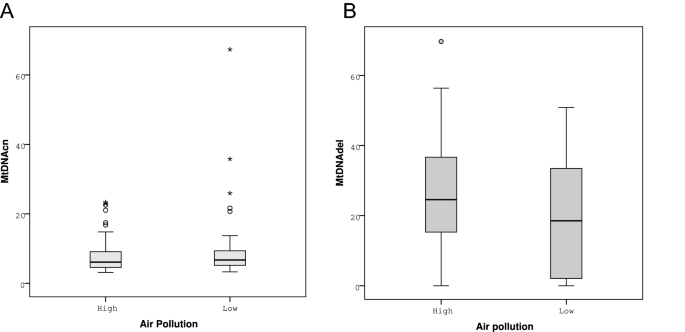
Association between sperm mitochondrial DNA copy number and deletion rate and industrial air pollution dynamics

alexandrossfakianakis shared this article with you from Inoreader

41598_2022_12328_Fig1_HTML.png

View on Web

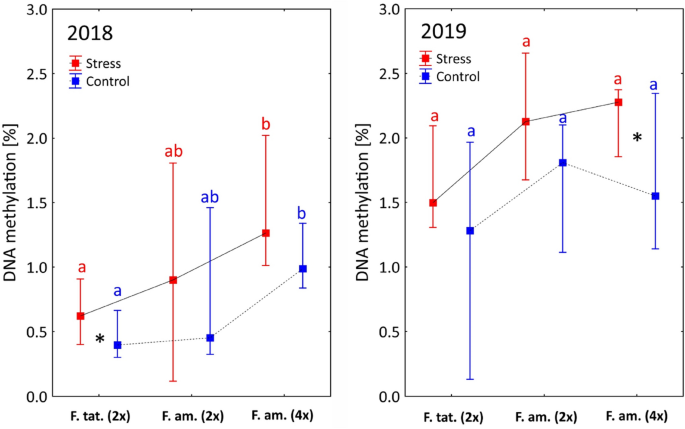
Changes in global DNA methylation under climatic stress in two related grasses suggest a possible role of epigenetics in the ecological success of polyploids

alexandrossfakianakis shared this article with you from Inoreader

41598_2022_12125_Fig1_HTML.png

View on Web

Total inferior border ostectomy versus T-shape genioplasty for chin narrowing combined with mandibular contouring

alexandrossfakianakis shared this article with you from Inoreader
The objective of this study was to compare the indications and outcomes of the total inferior border ostectomy and T-shape genioplasty. A retrospective study was conducted using the clinical notes and records of patients who underwent total inferior border ostectomy (group 1, n  = 42) and T-shape genioplasty (group 2, n = 60). The outcomes were evaluated by assessment of computed tomography images combined with medical records and photographs. Lower facial height, chin width, chin symmetry, and facial proportions, as well as patient satisfaction and complications were investigated. (Source: International Journal of Oral and Maxillofacial Surgery)
View on Web

Machine Learning Based Forecast of Dengue Fever in Brazilian Cities using Epidemiological and Meteorological Variables

alexandrossfakianakis shared this article with you from Inoreader
Abstract
Dengue is a serious public health concern in Brazil and globally. In the absence of a universal vaccine or specific treatments, prevention relies on vector control and disease surveillance. Accurate and early forecasts can help reduce the spread of the disease. In this study, we develop a model to predict monthly dengue cases in Brazilian cities one month ahead from 2007-2019. We compare different machine learning algorithms and feature selection methods using epidemiological and meteorological variables. We find that different models work best in different cities, and a random forests model trained on monthly dengue cases performs best overall. It produces lower errors than a seasonal naïve baseline model, gradient boosting regression, feed-forward neural network, and support vector regression. For each city, we compute the mean absolute error between predictions and true monthly dengue cases on the test set. For the median city, the error is 1 2.2 cases. This error is reduced to 11.9 when selecting the optimal combination of algorithm and input features for each city individually. Machine learning and especially decision tree ensemble models may contribute to dengue surveillance in Brazil, as they produce low out-of-sample prediction errors for a geographically diverse set of cities.
View on Web

Τρίτη 17 Μαΐου 2022

Oral swabs tested with Xpert MTB/RIF Ultra for diagnosis of pulmonary tuberculosis in children: a diagnostic accuracy study

alexandrossfakianakis shared this article with you from Inoreader
Abstract
Background
Microbiological diagnosis of childhood tuberculosis may be difficult. Oral swabs are a potential non-invasive alternative to sputum for diagnosis.
Methods
A prospective diagnostic accuracy study of oral swabs (buccal and tongue) for pulmonary tuberculosis (PTB) diagnosis in children (aged ≤15 years) in two South African hospital sites. Children with cough of any duration and either: a positive tuberculin skin test, TB contact, loss of weight or chest X-ray suggestive of PTB were enrolled. Two induced sputum specimens were tested with Xpert MTB/RIF (or Ultra) and liquid culture. Oral swabs were taken preceding sputum, frozen and later tested with Xpert MTB/RIF Ultra. Children were classified as microbiologically confirmed TB, Unconfirmed TB (received TB treatment) or unlikely TB according to NIH consensus definitions based on sputum microbiological results.
Results
Among 291 participants (median age 32 [IQR 14-73] months), 57 (20%) were living with HIV and 87 (30%) were malnourished. 90 (31%) had confirmed PTB (six (7%) with rifampicin-resistant TB), 157 (54%) unconfirmed PTB and 44 (15%) unlikely TB. One oral swab was obtained from 126 (43%) participants (96 tongue, 30 buccal) and two swabs from 165 (57%) (110 tongue, 55 buccal). Sensitivity was low; 22% (95% CI 15-32) for all swabs combined (confirmed PTB as reference), but specificity was high (100%, 95% CI 91-100). The highest sensitivity was 33% (15-58) among participants living with HIV. Overall yield was 6.9% with one oral swab, and 7.2% with two.
Conclusions
Ultra on oral swabs provides poor yield for microbiologic PTB confirmation in children.
View on Web